Many parents say:
“My child can repeat numbers, ABCs, rhymes, or even some words… but still does not communicate naturally.”
And this can feel confusing for parents.
But the important thing to understand is this:
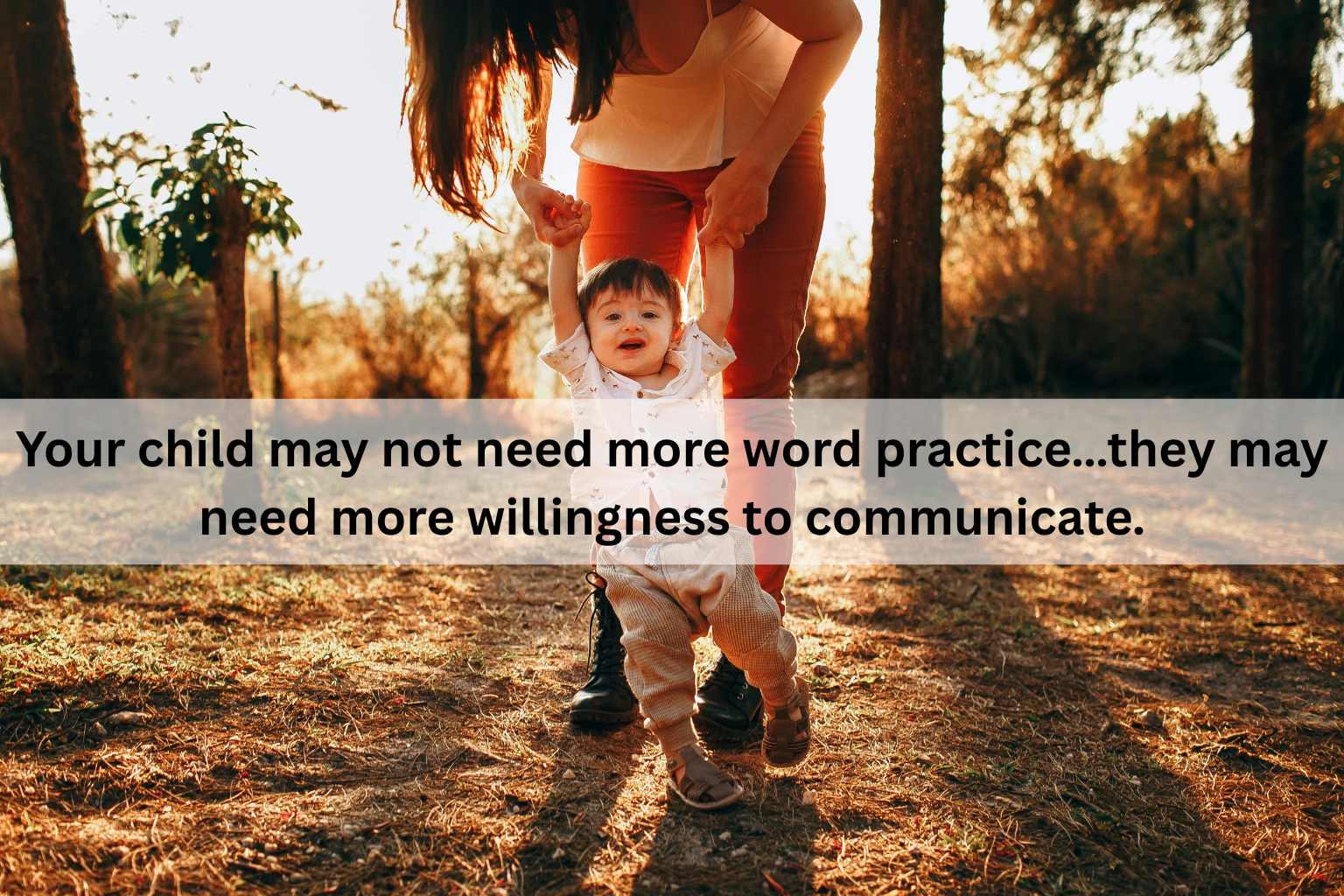
Repeating words and real communication are not always the same thing.
A child may be able to memorize or repeat sounds…
but communication is much deeper than repetition.
Because communication does not begin with words.
It begins with:
✔ connection
✔ understanding
✔ listening
✔ attention
✔ emotional safety
✔ willingness to interact
This is why some children can repeat beautifully during videos or prompts…
but may struggle to:
- ask for things naturally
- answer meaningfully
- express emotions
- initiate conversations
- connect socially
The brain first needs strong communication foundations before expressive language starts developing naturally.
Research in early childhood development suggests that communication develops through interaction, attention, emotional connection, listening, memory, and repeated experiences — not only through word practice alone.
E – Eye Contact
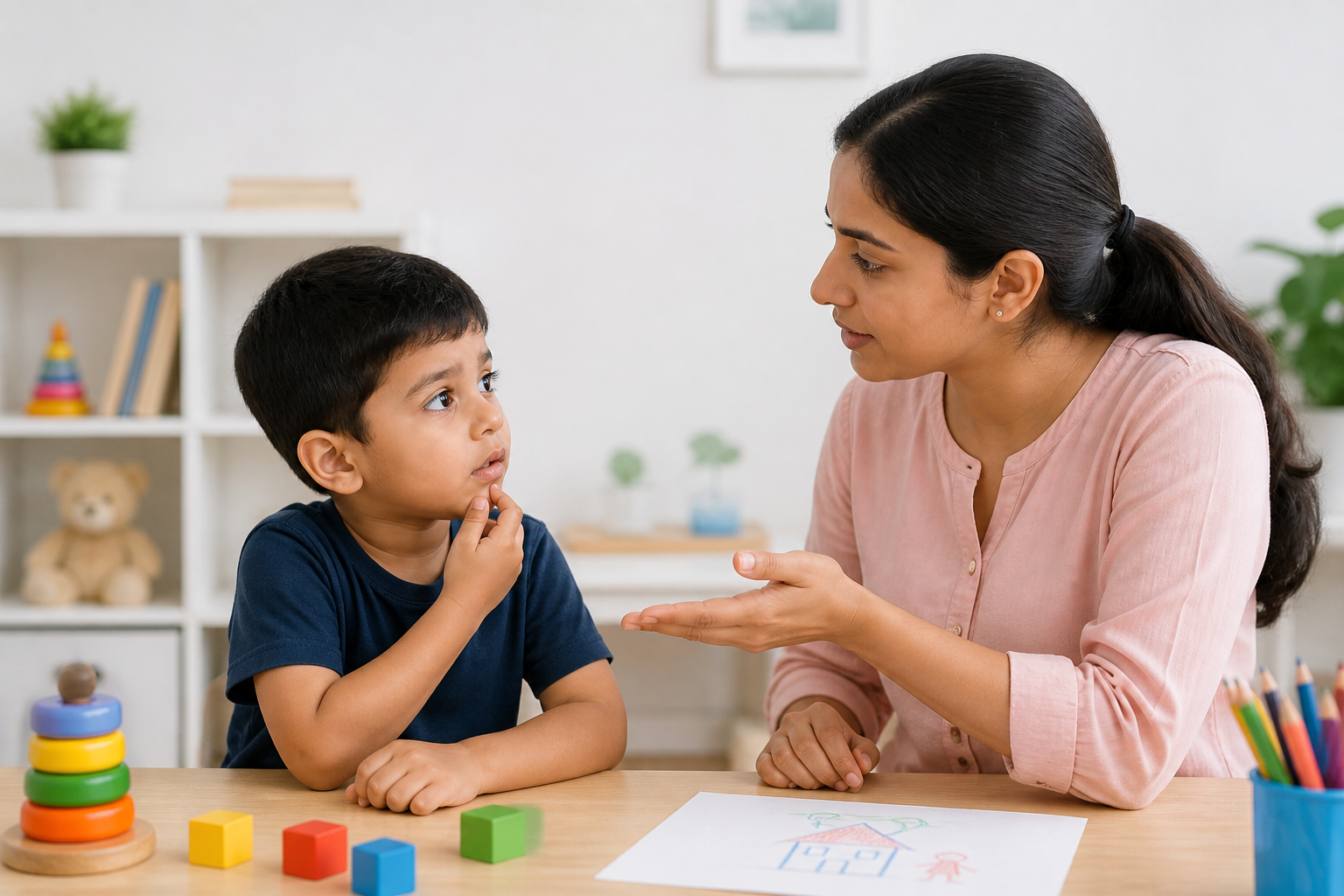
Eye contact is not simply about “looking at someone.”
It helps children build shared attention — an important communication foundation where the child and adult focus on the same interaction together.
Research shows that children learn language better when they are emotionally and visually engaged with people around them. Eye contact also supports imitation, emotional understanding, and social learning pathways in the brain.
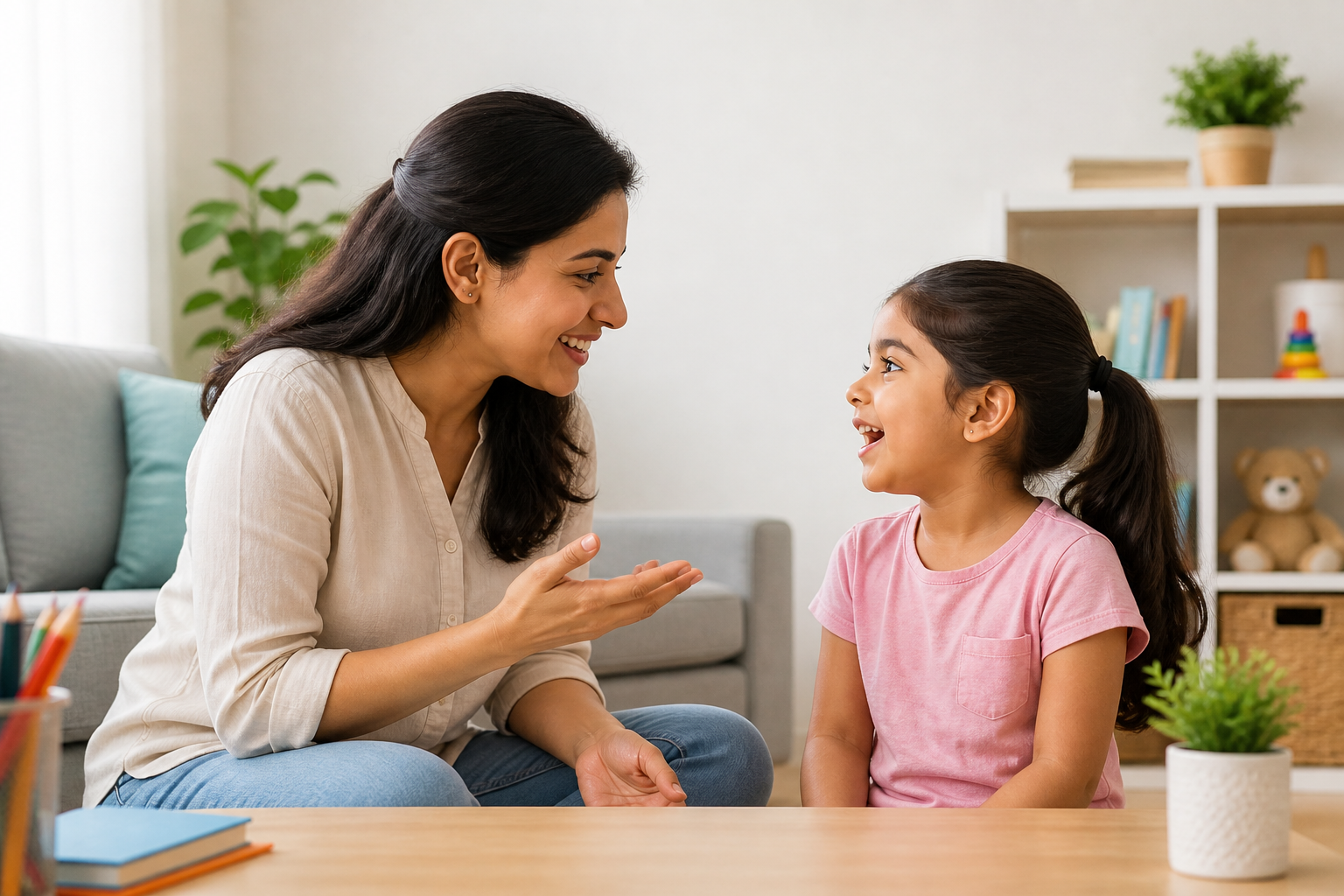
This is why face-to-face play, expressions, movement games, and responsive interaction are so important during communication development.
R – Relationship
Communication grows best through emotional safety and connection.
Studies in child development show that children learn and interact more effectively when they feel emotionally secure and connected with caregivers.
When children experience positive emotional interaction, the brain releases chemicals associated with bonding, learning, attention, and memory.
This is why playful interaction, responsive parenting, bonding activities, and emotionally warm environments are extremely important for communication growth.
Before communication becomes verbal…
it first becomes relational.
A – Asking Questions
Asking questions is not only a language skill.
It reflects curiosity, thinking, observation, social awareness, and cognitive processing.
When children begin asking questions naturally, it shows that the brain is becoming more engaged with interaction and understanding the world around them.
Instead of only teaching children to answer questions, it is equally important to create situations where they feel curious enough to initiate communication themselves.
L – Listening Skills
Listening is one of the biggest foundations of expressive communication.
Before children can use words meaningfully, the brain first needs to process, understand, store, and retain language.
Research in language development suggests that strong listening and auditory processing skills help children better understand sounds, instructions, words, and communication patterns.
This is why songs, storytelling, imitation games, action-based listening activities, and sound awareness activities can play an important role in communication development.
Because before children speak…
their brain first learns to listen.
A – Attention Span
Attention is deeply connected with learning and communication.
When children struggle to focus, observe, regulate, or stay connected during interaction, the brain receives fewer opportunities for meaningful communication learning.
Research in early brain development shows that attention supports information processing, memory, social interaction, and language learning.
Simple movement activities, sensory play, routines, imitation games, puzzles, and connection-based interaction can gradually help strengthen attention pathways naturally.
S – Subconscious Brain Activation
Children absorb far more from their environment than we often realize.
The subconscious brain continuously learns through repetition, observation, emotional experiences, rhythm, routines, tone of voice, and the surrounding environment.
This is why the home environment matters so much during communication development.
Things like:
- excessive screen exposure
- constant background sound
- emotional stress
- limited interaction
- rushed routines
can affect the quality of communication experiences children receive daily.
On the other hand, calm interaction, repetition through play, emotional bonding, storytelling, music, movement, and responsive communication create stronger learning opportunities for the developing brain.
This is why communication is not built only during “practice time.”
It is built through everyday connected experiences.
This is why communication development is not only about making children repeat words again and again.
It is about creating meaningful interaction, brain-based learning opportunities, and emotionally connected experiences.
Sometimes parents focus only on:
“Say this.”
“Repeat this.”
“Speak properly.”
But communication grows much better when children feel:
✔ connected
✔ understood
✔ emotionally safe
✔ engaged in interaction
Because speech is not the starting point of communication.
It is the outcome of many foundations working together.
—